How is this for some weight bearing exercises for osteoporosis week...
These people weigh 69kg (151.8 pounds) and they are lifting over 300 pounds over their head! Take note of their flexibility and of course their power and speed. It is the movement that is important for the general public not the weight. I teach my clients/patients to perform scaled versions of these movement because of their therapeutic benefits. The benefits include strength, power, speed, flexibility, coordination, accuracy, and balance. Do these lifts, gain these elements of fitness.
Showing posts with label circulation. Show all posts
Showing posts with label circulation. Show all posts
Monday, May 23, 2011

Thursday, May 5, 2011
What Are Tabata Sprints? | Mark's Daily Apple
What Are Tabata Sprints? | Mark's Daily Apple
As you probably already know, we’re big on sprinting around here for a number of reasons. First of all, sprints most closely emulate the type of activity Grok would have performed. You know – slowly stalking and hunting an animal for hours at a time (the constant, steady movement I prescribe) only to erupt with an intense burst of speed for the final kill (the sprint). Then he’d have to lug the thing back to camp (deadlifts, squats, and other high-intensity weight bearing training). Sprints are great because they are exactly the type of movement that man has been making for hundreds of thousands of years. Why mess with a good thing? Second, modern science has confirmed that Grok’s mode of exercise is actually the most efficient and effective. The chronic cardio crowd still has plenty of sway (as evidenced by the post-New-Year’s-eve legions of overweight joggers shambling down the streets with pained looks on their faces), but it’s getting difficult to ignore facts. We now know that...
Continue reading here.
As you probably already know, we’re big on sprinting around here for a number of reasons. First of all, sprints most closely emulate the type of activity Grok would have performed. You know – slowly stalking and hunting an animal for hours at a time (the constant, steady movement I prescribe) only to erupt with an intense burst of speed for the final kill (the sprint). Then he’d have to lug the thing back to camp (deadlifts, squats, and other high-intensity weight bearing training). Sprints are great because they are exactly the type of movement that man has been making for hundreds of thousands of years. Why mess with a good thing? Second, modern science has confirmed that Grok’s mode of exercise is actually the most efficient and effective. The chronic cardio crowd still has plenty of sway (as evidenced by the post-New-Year’s-eve legions of overweight joggers shambling down the streets with pained looks on their faces), but it’s getting difficult to ignore facts. We now know that...
Continue reading here.
Tuesday, April 19, 2011
Don't Just Sit There! --How bathroom posture affects your health.
Don't Just Sit There!
How bathroom posture affects your health.
By Daniel Lametti
Posted Thursday, Aug. 26, 2010, at 10:17 AM ET
 Shortly before Christmas in 1978, the leader of the free world came down with a severe case of hemor! rhoids. The pain was so bad that President Carter had to take a day of f from work. A few weeks later, Time Magazine asked a proctologist named Michael Freilich to explain the president's ailment. "We were not meant to sit on toilets," he said, "we were meant to squat in the field." He's probably right.
Michael Freilich isn't the first doctor to suggest that sitting on toilets—a recent phenomenon, stemming from the invention of the flush toilet in 1591—might be unhealthy. By the 1960s and '70s, the idea was relatively commonplace. Architect Alexander Kira argued in his 1966 book The Bathroom that human physiology is better suited to the squat. According to Bockus's Gastroenterology, a standard medical text from 1964, "the ideal posture for defecation is the squatting position, with the thighs fixed upon the abdomen."
Modern-day squat evangelists make money off the claim that a "more natural" posture wards off all sorts of health problems, from Crohn's disease to colon cancer. Inventor Jonathan Isbit runs a modest online business selling Nature's Platform—a homemade, $150 device that fits over toilets to make them more lik! e holes in the ground.* (He also posted the Bockus quote above to the Wikipedia entry on defecation.) Other entrepreneurs peddle similar products, like the In-Lieu, the Lillipad, the Evaco toilet converter, and, for those who don't like explaining their squat platform to house guests, a $688 Singaporean toilet that lets users switch among different squatting and sitting postures, from the "East Asian squat" to the "aft sit."* (Confused? Watch the video.)
That may sound like a bunch of Internet quackery, but there's now some e! mpirical evidence for the claim that defecation posture affects your body. The more extreme assertions about squatting—that it prevents cancer, for example—remain untested. But when it comes to hemorrhoids—a painful swelling of the veins in the anal canal that affects half of all Americans—new research suggests that you may want to get your butt off the toilet.
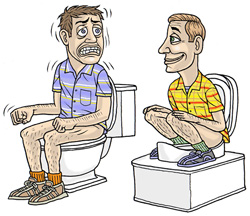
Before we dive into the data, let's review the mechanics of going to the bathroom. People can control their defecation, to some extent, by contracting or releasing the anal sphincter. But that muscle can't maintain continence on its own. The body also relies on a bend between the rectum—where feces builds up—and the anus—where feces comes out. When we're standing up, the extent of this bend, called the anorectal angle, is about 90 degrees, which puts upward pressure on the rectum and keeps feces inside. In a squatti! ng posture, the bend straightens out, like a kink ringed out of a gard en hose, and defecation becomes easier.
Proponents of squatting argue that conventional toilets produce an anorectal angle that's ill-suited for defecation. By squatting, they say, we can achieve "complete evacuation" of the colon, ridding our bowels of disease-causing toxins. But there's no reason to think that getting into a squat will make defecation more complete, nor that most people are sickened by their colons. If squatting does provide a health benefit, just as Michael Freilich stated in Time, it comes in the form of hemorrhoid prevention.
Hemorrhoids may be brought on by pregnancy, obesity, and receiving anal sex. But the main cause is straining during bowel movement. Straining increases the pressure in your abdomen, causing the veins that line your anus to swell. In hemorrhoi! d patients, those veins stay swollen and sometimes bleed. In theory, squatting might stave off hemorrhoids by making defecation easier, reducing the need to strain and decreasing abdominal pressure.
An Israeli doctor named Dov Sikirov tested this idea for a 2003 study published in Digestive Diseases and Sciences. He had several dozen patients defecate in each of three positions: sitting on a 16-inch-high toilet, sitting on a 12-inch-high toilet, and squatting over a plastic container. He asked his subjects to record how long each bowel movement took and rate the effort required on a four-point scale ranging from effortless to difficult. Sikirov found that, when squatting, subjects averaged a mere 51 seconds to move their bowels, versus 130 seconds when sitting on a high toilet. And as they moved from a sit to a squat, subjects were more likely to rate the experience as easier! .
Then last year, a group of Japanese doctors extended Sikirov' s findings by looking at what happens inside the body while people squat and sit. For a study published in the medical journal Lower Urinary Tract Symptoms, six subjects had their rectums filled with a contrast solution and then released the fluid from a squatting or a sitting position while being filmed with X-ray video. Image analysis showed that the anorectal angle increased from 100 degrees to 126 degrees as the subjects moved from a sit to a squat. The researchers also recorded abdominal pressure, and found that the subjects were straining less when they squatted.
Of course, it's one thing to show that squatting streamlines defecation and reduces hemorrhoid risk. It's another to actually move your bowels while you squat. But how hard could it be? For most of human history—several hundred thousand years—we've squatted. Today, 1.2 billion people s! quat because they simply don't have a toilet, while many, many more in Asia, the Middle East, and parts of Europe use toilets designed specifically for squatting. And for 28 years—from his junior year at Yale in 1970 to the moment when he completed the first Nature's Platform prototype in 1998—Jonathan Isbit "perched," as he put it, squatting on the rim of toilet seats. So I decided to try it—each morning for a week, following a bowl of corn flakes and a cup of coffee.
Besides tipping over, there's little danger in squatting over a modern sit toilet. Both American Standard and Kohler say that floor-mounted toilets are designed to hold at least 1,000 pounds. (Still, neither company recommends perching.) The American Society for Engineers requires that wall-mounted toilets hold 500 pounds. But squatting on your toile t seat is not for everybody. Even when I was holding onto a towel rack, the situation felt precarious. A bedpan or a plastic container would have been easier, but I didn't have the former and the latter seemed gross. So I forged ahead, pushing through the week—or, as it turned out, not pushing: Bowel movements just seem to happen in a squat. My 10-minute routine dropped to a minute, two at the most, and within a few days my knees stopped complaining.
Although the week is now over, I'll probably squat again. At the very least, I gained an hour over seven days. It seems doubtful, though, that squatting, even if it helps hemorrhoids, will become the next back-to-nature craze—the new barefoot running shoe or caveman diet. Sit toilets, in the short term at lea! st, are more comfortable than the squat toilets you might find in Europe. In fact, since Jimmy Carter's bout of hemorrhoids sit toilets have actually grown in height, pushing the anorectal angle in the wrong direction. Standard models, 14 inches from floor to rim, now compete with "comfort height" toilets that tower more than 17 inches of the floor. Americans, now fatter than ever, are having trouble standing up from a sit, never mind a squat.
Like Slate on Facebook. Follow us on Twitter.
Correction, Aug. 27, 2010: This article originally misspelled the first name of Jonathan Isbit. (Return to the corrected senten! ce.)
Correction, Sept . 13, 2010: The original sentence described the $688 toilet as being Japanese. (Return to the corrected sentence.)
Daniel Lametti is a scientist and writer who lives in Brooklyn.
Article URL: http://www.slate.com/id/
How bathroom posture affects your health.
By Daniel Lametti
Posted Thursday, Aug. 26, 2010, at 10:17 AM ET
 Shortly before Christmas in 1978, the leader of the free world came down with a severe case of hemor! rhoids. The pain was so bad that President Carter had to take a day of f from work. A few weeks later, Time Magazine asked a proctologist named Michael Freilich to explain the president's ailment. "We were not meant to sit on toilets," he said, "we were meant to squat in the field." He's probably right.
Michael Freilich isn't the first doctor to suggest that sitting on toilets—a recent phenomenon, stemming from the invention of the flush toilet in 1591—might be unhealthy. By the 1960s and '70s, the idea was relatively commonplace. Architect Alexander Kira argued in his 1966 book The Bathroom that human physiology is better suited to the squat. According to Bockus's Gastroenterology, a standard medical text from 1964, "the ideal posture for defecation is the squatting position, with the thighs fixed upon the abdomen."
Modern-day squat evangelists make money off the claim that a "more natural" posture wards off all sorts of health problems, from Crohn's disease to colon cancer. Inventor Jonathan Isbit runs a modest online business selling Nature's Platform—a homemade, $150 device that fits over toilets to make them more lik! e holes in the ground.* (He also posted the Bockus quote above to the Wikipedia entry on defecation.) Other entrepreneurs peddle similar products, like the In-Lieu, the Lillipad, the Evaco toilet converter, and, for those who don't like explaining their squat platform to house guests, a $688 Singaporean toilet that lets users switch among different squatting and sitting postures, from the "East Asian squat" to the "aft sit."* (Confused? Watch the video.)
That may sound like a bunch of Internet quackery, but there's now some e! mpirical evidence for the claim that defecation posture affects your body. The more extreme assertions about squatting—that it prevents cancer, for example—remain untested. But when it comes to hemorrhoids—a painful swelling of the veins in the anal canal that affects half of all Americans—new research suggests that you may want to get your butt off the toilet.
Before we dive into the data, let's review the mechanics of going to the bathroom. People can control their defecation, to some extent, by contracting or releasing the anal sphincter. But that muscle can't maintain continence on its own. The body also relies on a bend between the rectum—where feces builds up—and the anus—where feces comes out. When we're standing up, the extent of this bend, called the anorectal angle, is about 90 degrees, which puts upward pressure on the rectum and keeps feces inside. In a squatti! ng posture, the bend straightens out, like a kink ringed out of a gard en hose, and defecation becomes easier.
Proponents of squatting argue that conventional toilets produce an anorectal angle that's ill-suited for defecation. By squatting, they say, we can achieve "complete evacuation" of the colon, ridding our bowels of disease-causing toxins. But there's no reason to think that getting into a squat will make defecation more complete, nor that most people are sickened by their colons. If squatting does provide a health benefit, just as Michael Freilich stated in Time, it comes in the form of hemorrhoid prevention.
Hemorrhoids may be brought on by pregnancy, obesity, and receiving anal sex. But the main cause is straining during bowel movement. Straining increases the pressure in your abdomen, causing the veins that line your anus to swell. In hemorrhoi! d patients, those veins stay swollen and sometimes bleed. In theory, squatting might stave off hemorrhoids by making defecation easier, reducing the need to strain and decreasing abdominal pressure.
An Israeli doctor named Dov Sikirov tested this idea for a 2003 study published in Digestive Diseases and Sciences. He had several dozen patients defecate in each of three positions: sitting on a 16-inch-high toilet, sitting on a 12-inch-high toilet, and squatting over a plastic container. He asked his subjects to record how long each bowel movement took and rate the effort required on a four-point scale ranging from effortless to difficult. Sikirov found that, when squatting, subjects averaged a mere 51 seconds to move their bowels, versus 130 seconds when sitting on a high toilet. And as they moved from a sit to a squat, subjects were more likely to rate the experience as easier! .
Then last year, a group of Japanese doctors extended Sikirov' s findings by looking at what happens inside the body while people squat and sit. For a study published in the medical journal Lower Urinary Tract Symptoms, six subjects had their rectums filled with a contrast solution and then released the fluid from a squatting or a sitting position while being filmed with X-ray video. Image analysis showed that the anorectal angle increased from 100 degrees to 126 degrees as the subjects moved from a sit to a squat. The researchers also recorded abdominal pressure, and found that the subjects were straining less when they squatted.
Of course, it's one thing to show that squatting streamlines defecation and reduces hemorrhoid risk. It's another to actually move your bowels while you squat. But how hard could it be? For most of human history—several hundred thousand years—we've squatted. Today, 1.2 billion people s! quat because they simply don't have a toilet, while many, many more in Asia, the Middle East, and parts of Europe use toilets designed specifically for squatting. And for 28 years—from his junior year at Yale in 1970 to the moment when he completed the first Nature's Platform prototype in 1998—Jonathan Isbit "perched," as he put it, squatting on the rim of toilet seats. So I decided to try it—each morning for a week, following a bowl of corn flakes and a cup of coffee.
Besides tipping over, there's little danger in squatting over a modern sit toilet. Both American Standard and Kohler say that floor-mounted toilets are designed to hold at least 1,000 pounds. (Still, neither company recommends perching.) The American Society for Engineers requires that wall-mounted toilets hold 500 pounds. But squatting on your toile t seat is not for everybody. Even when I was holding onto a towel rack, the situation felt precarious. A bedpan or a plastic container would have been easier, but I didn't have the former and the latter seemed gross. So I forged ahead, pushing through the week—or, as it turned out, not pushing: Bowel movements just seem to happen in a squat. My 10-minute routine dropped to a minute, two at the most, and within a few days my knees stopped complaining.
Although the week is now over, I'll probably squat again. At the very least, I gained an hour over seven days. It seems doubtful, though, that squatting, even if it helps hemorrhoids, will become the next back-to-nature craze—the new barefoot running shoe or caveman diet. Sit toilets, in the short term at lea! st, are more comfortable than the squat toilets you might find in Europe. In fact, since Jimmy Carter's bout of hemorrhoids sit toilets have actually grown in height, pushing the anorectal angle in the wrong direction. Standard models, 14 inches from floor to rim, now compete with "comfort height" toilets that tower more than 17 inches of the floor. Americans, now fatter than ever, are having trouble standing up from a sit, never mind a squat.
Like Slate on Facebook. Follow us on Twitter.
Correction, Aug. 27, 2010: This article originally misspelled the first name of Jonathan Isbit. (Return to the corrected senten! ce.)
Correction, Sept . 13, 2010: The original sentence described the $688 toilet as being Japanese. (Return to the corrected sentence.)
Daniel Lametti is a scientist and writer who lives in Brooklyn.
Article URL: http://www.slate.com/id/
© 2010 Washingtonpost.Newsweek Interactive Co. LLC
Sunday, April 10, 2011
CrossFit Games Sectional 11.3 (4.10.11)
CrossFit Sectional Workout 11.3
5 min (as many rounds as possible)
165# clean and jerk
16 rounds
Wednesday, March 2, 2011
Reverse Magazine: Woman Are Wrong About Fat Loss and Fitness
Reverse Magazine: Woman Are Wrong About Fat Loss and Fitness: " The Dirty Dozen Mistakes Women Make The female population has tremendous leverage in the marketplace. Anyone in advertisin..."
Monday, January 17, 2011
The Nitty Gritty on Calorie Burn
Learning a little science will help you understand your body better and help you achieve your desired goals.
First learn our different types of muscle and their role:
We have three muscle types:
1. skeletal muscle
2. cardiac muscle
3. smooth muscle
Smooth muscle (digestive muscles and arteries) and cardiac muscle (heart pumping) are involuntary, meaning that we do not have think and concentrate to make these muscles move.
Skeletal muscle (muscles for movement) is controlled voluntarily, meaning that we have control over these muscle when we want use them.
Muscles perform four essential functions: They maintain body posture, stabilize joints, produce movement and generate heat we need to survive.
Second, learn about body heat.
Your body heats up when muscles contract. So when you move and exercise, when your heart pumps, and when we digest food, our bodies are using energy to produce heat. Sometimes we feel cold after eating, but that is just because blood is rushing to your gastrointestinal tract and away from your skin. ...And you are probably sitting there in a food coma after eating too much!
Working muscle produces heat in two ways:
Third, understand that it takes a lot of energy to move your body, to move food through your body, to pump blood to your organs, muscle, to and away from the skin and just keep you functioning. So where does all this energy come from? Energy comes from food we eat, and stored food (fat).
When you are trying to lose weight there are bunch of things you can do to use energy (burn calories/create heat).
Use your muscles!
Get your heart pumping to a greater degree than normal.
Use your skeletal muscles (which also gets your heart pumping)
Contrast baths (hot and cold contrasts, so your body has to heat up when cold and cool down when hot)
Now how do you get the smooth muscle to contract even when they are involuntary?
Eat more food! Eat more often in smaller quantities to keep the smooth muscle constantly working.
To lose weight you must use all three muscle types to burn large amounts of calories. This is how you do it:
 Exercise: Strength train. Stress the muscles to a greater degree than they are used to. I am talking about the big muscles that cross many joints like the legs, core and arms (yes, total body strength training, not just your bi's and tri's)
 Eat: Eat fiber, mostly plants (vegetables) for energy. Plants take a long time to grow, they take a long time to digest, they fill lots of space in your guts, they are low in calories, they require smooth muscle to move through your body, they are cheap, they look good, they taste good, and they are full of vitamins. Eat meat. You need some building materials for all that muscle you are breaking down lifting weights and sprinting. Eat fat. If you eat meat, you are probably are getting decent amount of fat. Fat gives you a full feeling, keeps you full, and tastes so good!
 Get your heart pumping: Eating and exercising are both going to get your heart rate up. Exercise is definitely going to get your heart rate up higher than eating. 'Cardio' is fine, but high intensity strength training is going to keep your heart rate elevated even after you are through exercising.
Sample Breakfast:
-2-4 eggs with 2-4 cups green peppers, onion, zucchini, mushrooms (1 serving of protein source to ~1+ cup of vegetables)
-water
Sample snack:
protein shake
1/2 banana
Sample Lunch:
-3-6 oz. meat, 3-6 cups of vegetables
-water
Sample snack:
-carrots+hummus
-water
Sample Dinner:
-3-6 oz. lb meat, 3-6 cups of vegetables
-water
Sample Workouts:
1. 20 squats, 10 push ups (six rounds as fast as possible)
2. 8 lunges, 8 sit ups, 8 overhead presses (repeat for 20 minutes)
First learn our different types of muscle and their role:
We have three muscle types:
1. skeletal muscle
2. cardiac muscle
3. smooth muscle
Smooth muscle (digestive muscles and arteries) and cardiac muscle (heart pumping) are involuntary, meaning that we do not have think and concentrate to make these muscles move.
Skeletal muscle (muscles for movement) is controlled voluntarily, meaning that we have control over these muscle when we want use them.
Muscles perform four essential functions: They maintain body posture, stabilize joints, produce movement and generate heat we need to survive.
Second, learn about body heat.
Your body heats up when muscles contract. So when you move and exercise, when your heart pumps, and when we digest food, our bodies are using energy to produce heat. Sometimes we feel cold after eating, but that is just because blood is rushing to your gastrointestinal tract and away from your skin. ...And you are probably sitting there in a food coma after eating too much!
Working muscle produces heat in two ways:
- The chemical energy used in muscles contracting is not efficiently turned into mechanical energy. (It is about 20 to 25 percent efficient.) The excess energy is lost as heat.
- The various metabolic reactions (anaerobic, aerobic) also produce heat.
Third, understand that it takes a lot of energy to move your body, to move food through your body, to pump blood to your organs, muscle, to and away from the skin and just keep you functioning. So where does all this energy come from? Energy comes from food we eat, and stored food (fat).
When you are trying to lose weight there are bunch of things you can do to use energy (burn calories/create heat).
Use your muscles!
Get your heart pumping to a greater degree than normal.
Use your skeletal muscles (which also gets your heart pumping)
Contrast baths (hot and cold contrasts, so your body has to heat up when cold and cool down when hot)
Now how do you get the smooth muscle to contract even when they are involuntary?
Eat more food! Eat more often in smaller quantities to keep the smooth muscle constantly working.
To lose weight you must use all three muscle types to burn large amounts of calories. This is how you do it:

 Get your heart pumping: Eating and exercising are both going to get your heart rate up. Exercise is definitely going to get your heart rate up higher than eating. 'Cardio' is fine, but high intensity strength training is going to keep your heart rate elevated even after you are through exercising.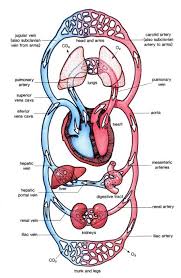
Sample Breakfast:
-2-4 eggs with 2-4 cups green peppers, onion, zucchini, mushrooms (1 serving of protein source to ~1+ cup of vegetables)
-water
Sample snack:
protein shake
1/2 banana
Sample Lunch:
-3-6 oz. meat, 3-6 cups of vegetables
-water
Sample snack:
-carrots+hummus
-water
Sample Dinner:
-3-6 oz. lb meat, 3-6 cups of vegetables
-water
Sample Workouts:
1. 20 squats, 10 push ups (six rounds as fast as possible)
2. 8 lunges, 8 sit ups, 8 overhead presses (repeat for 20 minutes)
Thursday, January 13, 2011
Therapeutic Movements for Everyone
Everyone will benefit from these movements and holds, but as a person who sits at a desk for many hours, or spends prolonged periods in a car, performing these will help prevent or ease pain in problem areas.
Thursday, January 6, 2011
The CURE for chronic diseases (diabetes, heart disease, obseity, HBP, HCHO)
If you are at all concerned about diabetes or health in general these videos are for you.
Even if you are not concerned..this is worth your time! Learn something and share the knowledge.
The 7 keys:
1) Optimize nutrition (minimize sugar, eat more vegetables for fiber and nutrients)
2) Balance your hormones (with optimal nutrition, exercise and low stress)
3) Cool off your inflammation (with optimal nutrition and exercise)
4) Fix your gut (with optimal nutrition and exercise)
5) Enhance detoxification (with optimal nutrition and exercise)
6) Boost your energy metabolism (with optimal nutrition and exercise)
7) Calm your mind (breathe and let go)
Even if you are not concerned..this is worth your time! Learn something and share the knowledge.
The 7 keys:
1) Optimize nutrition (minimize sugar, eat more vegetables for fiber and nutrients)
2) Balance your hormones (with optimal nutrition, exercise and low stress)
3) Cool off your inflammation (with optimal nutrition and exercise)
4) Fix your gut (with optimal nutrition and exercise)
5) Enhance detoxification (with optimal nutrition and exercise)
6) Boost your energy metabolism (with optimal nutrition and exercise)
7) Calm your mind (breathe and let go)
Tuesday, January 4, 2011
Foot Pain
 Foot pain is a common problem for many people for various reasons including, large body mass, bad arch support or weak feet, foot trauma, prolonged standing, improper shoes, and tight hamstrings. Your feet are hurting, don't just neglect them! Whether you are an athlete running 30 miles a week, a high-heeled bank teller, a grandpa, or just overweight, self-management is key to minimizing the pain your are experiencing.
Most often people lack natural movement with their feet. Upon waking, many just stuff their foot into a rigid shoe and that's it. It just sits in there for hours each day. Similar to a cast for broken bones, this immobilization causes weakness of the foot and lower leg and can even negatively change your gait which usually leads to an array of other problems!
Do this first...
Do this too..
-Exercise your feet (move them)...gripping and extending your toes, walking barefoot in sand or anywhere.
-Consider thinner soled, flexible shoes.
-Lose some weight if you are overweight.
-Talk with Dr. Elahi about orthotic shoe inserts.
Thursday, December 16, 2010
Omega-3s are incredibly potent anti-inflammatory supplements
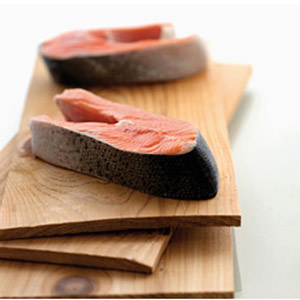 Omega-3s are incredibly potent anti-inflammatory supplements
 Omega 3 fats are essential fats found naturally in oily fish, with highest concentrations in salmon, herring, mackerel, and sardines. A body of scientific evidence which suggests that they reduce cardiovascular disease risk, blood pressure, clot formations, and certain types of fat in the blood.

Wednesday, November 3, 2010
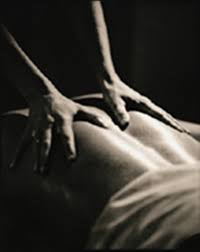
Why massage?
If you are considering getting a massage consider these benefits:
decreased muscle tension
 increased muscle function
increased circulation
ease joint pain
improve sleep
reduce stress
mental relaxation
physical relaxation
increase range of motion
avoid injury
reduce headaches
improve posture
Health First Wellness Center provides the opportunity to receive massage therapy.
The benefits of massage can be drastically improved through other treatment at Heath First Wellness Center. There is no quick fix to optimal health. A lifestyle change could be difficult, but Health First Wellness Center will work with you so you can make gradual changes towards a healthier life.
decreased muscle tension
 increased muscle function
increased circulation
ease joint pain
improve sleep
reduce stress
mental relaxation
physical relaxation
increase range of motion
avoid injury
reduce headaches
improve posture
Health First Wellness Center provides the opportunity to receive massage therapy.
The benefits of massage can be drastically improved through other treatment at Heath First Wellness Center. There is no quick fix to optimal health. A lifestyle change could be difficult, but Health First Wellness Center will work with you so you can make gradual changes towards a healthier life.
Subscribe to:
Posts (Atom)