Showing posts with label exercise. Show all posts

Monday, May 23, 2011

69kg Snatch 2009 Weightlifting Worlds

How is this for some weight bearing exercises for osteoporosis week...

These people weigh 69kg (151.8 pounds) and they are lifting over 300 pounds over their head!  Take note of their flexibility and of course their power and speed.  It is the movement that is important for the general public not the weight.  I teach my clients/patients to perform scaled versions of these movement because of their therapeutic benefits.  The benefits include strength, power, speed, flexibility, coordination, accuracy, and balance.  Do these lifts, gain these elements of fitness.

Thursday, May 5, 2011

What Are Tabata Sprints? | Mark's Daily Apple

What Are Tabata Sprints? | Mark's Daily Apple

As you probably already know, we’re big on sprinting around here for a number of reasons. First of all, sprints most closely emulate the type of activity Grok would have performed. You know – slowly stalking and hunting an animal for hours at a time (the constant, steady movement I prescribe) only to erupt with an intense burst of speed for the final kill (the sprint). Then he’d have to lug the thing back to camp (deadlifts, squats, and other high-intensity weight bearing training). Sprints are great because they are exactly the type of movement that man has been making for hundreds of thousands of years. Why mess with a good thing? Second, modern science has confirmed that Grok’s mode of exercise is actually the most efficient and effective. The chronic cardio crowd still has plenty of sway (as evidenced by the post-New-Year’s-eve legions of overweight joggers shambling down the streets with pained looks on their faces), but it’s getting difficult to ignore facts. We now know that...

Continue reading here.

Sunday, March 13, 2011

RKC Snatch Test 1 3 13 11

The goal is 100 reps within 5 minutes. This is 24kg (~53#).  My first attempt.

Friday, February 18, 2011

Press Release-Highest Rates of Physical Inactivity


 CDC-Reports on Physical Inactivity

 "Areas where residents are most likely to be active in their free time are the West Coast, Colorado, Minnesota and parts of the Northeast."

"States where residents are the least likely to be physically active during leisure time are Alabama, Kentucky, Louisiana, Mississippi, Oklahoma and Tennessee. In those states, physical inactivity rates are 29.2 percent or greater for more than 70 percent of the counties."

 "Physical activity is crucial to managing diabetes and reducing serious complications of the disease,"


Interactive map: Centers for Disease Control and Prevention
(you can break it down by state and county to see how your area)

County Level Estimates of Leisure-Time Physical Inactivity — U.S. Maps 

2008 Age-Adjusted Estimates of the Percentage of Adults Who Are Physically Inactive

Centers for Disease Control and Prevention: National Diabetes Surveillance System.
Available online at: http://apps.nccd.cdc.gov/DDTSTRS/default.aspx. Retrieved 2/18/2011.

Tuesday, February 15, 2011

"Weightlifting can be helpful for obese kids" and “Hey, That’s Exercise!” (Actually, It Might Not Be.)


In-Your-Face Fitness: Weightlifting can be helpful for obese kids - latimes.com

I love how this article brings weightlifting into the light for obese kids.  It not only benefits obese children, but adults too!  


“Hey, That’s Exercise!” (Actually, It Might Not Be.)

Here is an article that discusses what you may think is exercise, but actually isn't. Yes, moving is something over nothing, but picking up heavy things is just better!

Monday, February 14, 2011

Stick figure Heros!


This first sheet is a compilation of exercises that will help you move from a sedentary state to leading a more active lifestyle.  These exercises will promote balance, flexibility, coordination, and an emphasis on core strength.


This second set of exercises are the basics of strength training.  The majority of these exercises can be performed with or without weights.  Holding your spine in a neutral position, in each of these movements is essential, especially when adding weight to the movement.

Thursday, February 10, 2011

No More Crunches? Abs-olutely! | ThePostGame

No More Crunches? Abs-olutely! | ThePostGame

If you have trained with me, you may have noticed the minimal or zero amount of sit-ups or crunches we do. The bulk of my strength training revolves around spinal bracing using your abs and back to protect the spine from unwanted movement while the greater muscles of the hips are used to produce movement as in squats, lunges, and deadlifts. Even when pressing weight overhead, or doing push up, the spine needs to be braced and rigid.

Of course, maintaining a flexible spine is important. Having a flexible spine will keep you feeling youthful. The combination of strength and flexibility is amazing! Move when you want to move, and brace when you want to or need to brace.

Here is a perfectly healthy isometric hold that demonstrates spinal flexibility and bracing simultaneously.

This is Katie.


This is my pregnant sister, Dana.

Friday, February 4, 2011

16 Cardinal Rules for Snow Shovelling

16 Cardinal Rules for Snow Shovelling

I am a little late to post this, but regardless, take a look at this article.  It seems all pretty common sense, but maybe you didn't know these things about shoveling.


I can't say I agree entirely with this:

6. Maintain proper posture:

A. Use your leg muscles as much as possible - push snow when you can and use your legs to lift when you can't push it.
B. Keep your back straight as you move from the squat position to the upright position.
C. Use your shoulder muscles as much as possible.
D. Hold the snow shovel as close to your upper body as possible.
E. Keep one hand close to the shovel blade for better leverage.
F. Don't twist your upper body as you throw snow.

Mine recommendations is this:

A.  Use your hips and core as much as possible - push snow when you can and keep your core (back and stomach) tight as your use your legs to lift when you can't push it.
B.  Keep your back straight (neutral) as your move from the bent (at hips and knees) position to the upright position.
C.  Use your hips and core as much as possible as these will fatigue much less quickly than your shoulders.
D.  Hold the snow shovel as close to your hips as possible.
E.  Keep one hand in the middle of the stick for better leverage.
F.  Keep your core tight as your pivot your feet as your throw snow.

I came across this.  This is a good example:

Friday, January 21, 2011

Learn from kids.

If you want to be better at something, you are going to have to work for it. Including being healthy and moving well.


Twelve Year Old Basketball Sensation - Watch more Funny Videos

Monday, January 17, 2011

The Nitty Gritty on Calorie Burn

Learning a little science will help you understand your body better and help you achieve your desired goals.
 First learn our different types of muscle and their role: 
We have three muscle types:
1.  skeletal muscle
2.  cardiac muscle
3.  smooth muscle

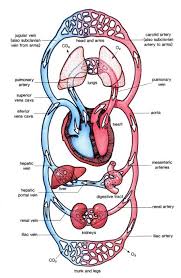
Smooth muscle (digestive muscles and arteries) and cardiac muscle (heart pumping) are involuntary, meaning that we do not have think and concentrate to make these muscles move.

Skeletal muscle (muscles for movement) is controlled voluntarily, meaning that we have control over these muscle when we want use them.

Muscles perform four essential functions: They maintain body posture, stabilize joints, produce movement and generate heat we need to survive.

Second, learn about body heat.

Your body heats up when muscles contract.  So when you move and exercise, when your heart pumps, and when we digest food, our bodies are using energy to produce heat.  Sometimes we feel cold after eating, but that is just because blood is rushing to your gastrointestinal tract and away from your skin.  ...And you are probably sitting there in a food coma after eating too much!   

Working muscle produces heat in two ways:
  • The chemical energy used in muscles contracting is not efficiently turned into mechanical energy. (It is about 20 to 25 percent efficient.) The excess energy is lost as heat.
  • The various metabolic reactions (anaerobic, aerobic) also produce heat. 
Your body needs to remove this excess heat. The heat produced by exercising muscle causes blood vessels in the skin to dilate, which increases the blood flow to the skin. This elevated blood flow to the skin and the large surface area of the skin allows the excess heat to be lost to the surrounding air. Also, receptors carry the message of excess heat to your body's thermostat, the hypothalamus in the brain. Nerve impulses from the hypothalamus stimulate sweat glands in the skin to produce sweat. The fluid for the sweat also comes from the increased skin blood flow. The sweat evaporates from the skin, removing heat and cooling the body.

Third, understand that it takes a lot of energy to move your body, to move food through your body, to pump blood to your organs, muscle, to and away from the skin and just keep you functioning.  So where does all this energy come from?  Energy comes from food we eat, and stored food (fat). 

When you are trying to lose weight there are bunch of things you can do to use energy (burn calories/create heat).

Use your muscles!
Get your heart pumping to a greater degree than normal.
Use your skeletal muscles (which also gets your heart pumping)
Contrast baths (hot and cold contrasts, so your body has to heat up when cold and cool down when hot)
Now how do you get the smooth muscle to contract even when they are involuntary?
Eat more food!  Eat more often in smaller quantities to keep the smooth muscle constantly working.

To lose weight you must use all three muscle types to burn large amounts of calories.  This is how you do it:

Exercise:  Strength train.  Stress the muscles to a greater degree than they are used to.  I am talking about the big muscles that cross many joints like the legs, core and arms (yes, total body strength training, not just your bi's and tri's)
Eat:  Eat fiber, mostly plants (vegetables) for energy.  Plants take a long time to grow, they take a long time to digest, they fill lots of space in your guts, they are low in calories, they require smooth muscle to move through your body, they are cheap, they look good, they taste good, and they are full of vitamins.  Eat meat.  You need some building materials for all that muscle you are breaking down lifting weights and sprinting.  Eat fat.  If you eat meat, you are probably are getting decent amount of fat.  Fat gives you a full feeling, keeps you full, and tastes so good!


Get your heart pumping:  Eating and exercising are both going to get your heart rate up.  Exercise is definitely going to get your heart rate up higher than eating.  'Cardio' is fine, but high intensity strength training is going to keep your heart rate elevated even after you are through exercising.


Sample Breakfast:
-2-4 eggs with 2-4 cups green peppers, onion, zucchini, mushrooms (1 serving of protein source to ~1+ cup of vegetables)
-water

Sample snack:
protein shake
1/2 banana

Sample Lunch:
-3-6 oz. meat, 3-6 cups of vegetables
-water

Sample snack:
-carrots+hummus
-water

Sample Dinner:
-3-6 oz. lb meat, 3-6 cups of vegetables
-water

Sample Workouts:
1.  20 squats, 10 push ups (six rounds as fast as possible)
2.  8 lunges, 8 sit ups, 8 overhead presses (repeat for 20 minutes)

Thursday, January 13, 2011

Therapeutic Movements for Everyone

Everyone will benefit from these movements and holds, but as a person who sits at a desk for many hours, or spends prolonged periods in a car, performing these will help prevent or ease pain in problem areas.

Tuesday, January 4, 2011

Foot Pain

Foot pain is a common problem for many people for various reasons including, large body mass, bad arch support or weak feet, foot trauma, prolonged standing, improper shoes, and tight hamstrings.  Your feet are hurting, don't just neglect them!  Whether you are an athlete running 30 miles a week, a high-heeled bank teller, a grandpa, or just overweight, self-management is key to minimizing the pain your are experiencing.

Most often people lack natural movement with their feet.  Upon waking, many just stuff their foot into a rigid shoe and that's it.  It just sits in there for hours each day.  Similar to a cast for broken bones, this immobilization causes weakness of the foot and lower leg and can even negatively change your gait which usually leads to an array of other problems!

Do this first...
Do this too..

-Exercise your feet (move them)...gripping and extending your toes, walking barefoot in sand or anywhere.
-Consider thinner soled, flexible shoes.
-Lose some weight if you are overweight.
-Talk with Dr. Elahi about orthotic shoe inserts.

Thursday, December 30, 2010

Holidays are Over!


Well nearly over.  You should have already thought about your health plans for the new year.  I am NOT talking about 'I am going to get in shape' type of plan.  You need something more concrete!  SMART goals.  Specific, Measurable, Attainable, Realistic, Timed.

A SMART goal is:
Who/What/When:  I am going to lose at least 5 pounds in three months and keep that weight off for the remainder of my life.

Why:  I want to maintain and/or improve my health through self management and not have to rely on prescriptions and doctors to fix preventable issues before they become problems.  I want to live independently.  I want to have confidence, feel younger, move more freely, reduce pain, prevent injury, and reduce illness.


How:  I am going to incorporate more physical activity into my life everyday by either parking further, taking the stairs, doing 20 squats a day, dedicating time to strengthening my body or seeing a personal trainer.


Stop waiting around until you are sick and in pain.  Manage your life responsibly.  Move more, eat healthier, sleep enough, and start feeling better.

Monday, December 20, 2010

5 Factors Behind Exercise Discomfort - Health Key

5 Factors Behind Exercise Discomfort - Health Key

5 Factors Behind Exercise Discomfort


Exercise can be uncomfortable when beginning any new type of training or when getting back in the saddle after a long break.

In last week's column I talked about the discomfort of exercise when starting out and also when competing at the elite level. It's universal; it happens to everyone, and it is not a sign that you are not cut out for exercise. On the contrary, everyone is cut out for exercise. And for the vast expanse of training levels between the two extremes, exercise is a feel-good experience - most of the time.

Even in the middle, however, a little discomfort now and then is not unusual or unexpected. And it's not a sign to quit your fitness program. Instead, I use it as an opportunity to get to know my body better. You can do so as well by breaking down any exercise discomfort you experience into its essential components.

Exercise physiology physician Massimo Testa, M.D., advises athletes to assess exercise discomfort as a combination of five factors:
  • Your level of fitness
  • The intensity of the exercise
  • The degree to which you can tolerate the exercise
  • Your motivation to keep exercising
  • The degree to which you perceive you are suffering
The first factor comes into play when, say, walking three miles feels hard because it's way beyond your fitness level. The other four factors may all be negligible - the pace is not too intense, you can tolerate exercise well and feel motivated, and sunshine mutes any grumbling - but your newness to fitness alone can spike your feeling of discomfort. Once you are walking five miles at a pop regularly, however, walking three miles won't even register on your discomfort radar. The work your body does to walk three miles won't change, but your improved fitness will shrink your discomfort.

Meanwhile, if you exercise at an intensity that is 70 percent to 80 percent of the greatest intensity you could possibly do, you (or anyone) will be uncomfortable starting out. After you're experienced training at that intensity, though, you won't be uncomfortable with pushing yourself that hard. That's essentially the basis of interval training: You train at a higher intensity in short bursts (say, a few minutes) interspersed with rests (blocks of time at low-intensity) and soon higher-intensity exercise doesn't hurt quite so much, because your muscles and lungs are getting in better shape.

Your brain also gets in better shape, creating a greater tolerance for exercise. As it learns to manage greater fatigue, your brain will interpret the same signals from your body differently.

Likewise, the signals to your brain (or your interpretation of them) change with your level of motivation. As you exercise, the level of signals coming from your body has a value - a number from 1 to 10, say - but the message from your cerebral cortex modifies that value, given your motivation. A 7 today can feel like a 10 next week if it's raining and you don't want to be out there. Other days, it can feel like a 3, if you're with friends.

This is where the chatter going on in your cerebral cortex is cardinal to your fitness: It's responsible for telling you how long you want to push yourself, either I can't stand this another second! or I can hold this for another 30 seconds. You can control that chatter - and thus the impact of the motivation variable - very effectively.


( Eric Heiden, M.D., a five-time Olympic gold medalist speed skater, is now an orthopedic surgeon in Utah. He co-authored Faster, Better, Stronger: Your Exercise Bible, for a Leaner, Healthier Body in Just 12 Weeks (HarperCollins) with exercise performance physician Max Testa, M.D., and DeAnne Musolf. www.heidenothopaedics.com)